

Why infection control is critical in an at-home setting
When you invite a mobile nail technician into your home, you expect professional-grade luxury and personalized care. What clients often overlook, however, is that mobile manicures present unique infection-control challenges that require stricter operational protocols than stationary salons.
In a traditional brick-and-mortar salon, workstations are fixed, plumbing is plumbed directly for sanitation, and decontamination rooms are separated from client service areas. In contrast, a mobile technician operates in domestic living spaces where pet dander, kitchen airborne bacteria, and household dust are naturally present.
Without meticulous infection-control standards, nail services carry genuine health risks. Cuticle nippers and electric file bits work micro-millimeters from living capillary tissue. Contaminated implements can transmit viral warts (HPV), bacterial paronychia (Staph and Strep), fungal infections, and blood-borne pathogens. A reputable mobile technician considers sanitation their absolute highest professional duty.
Single-use disposables vs. sterilised metal implements
Understanding the legal and public health distinction between single-use disposables and reusable multi-use implements is the single most powerful tool you have to protect your health:
1. Strictly Single-Use (Porous) Items
Porous materials absorb moisture, dead skin cells, and microorganisms into their internal fibers. They cannot be reliably disinfected with chemical sprays or liquid soaks. The following items MUST be opened fresh for your appointment and either discarded in front of you or gifted to you for personal home care:
- Cardboard nail files and emery boards: Never allow a technician to use a file that has white dust or filings from another client.
- Foam buffing blocks: Sponges and foam blocks trap microscopic skin debris and must never be reused across clients.
- Wooden orange cuticle sticks: Porous wood cannot be sterilized; once used, it must be thrown away.
- Lint-free wipes and cotton pads: Freshly dispensed from an enclosed container.
- Disposable table mats and towels: Impermeable paper/plastic barrier sheets placed over your table.
2. Reusable Multi-Use (Non-Porous) Implements
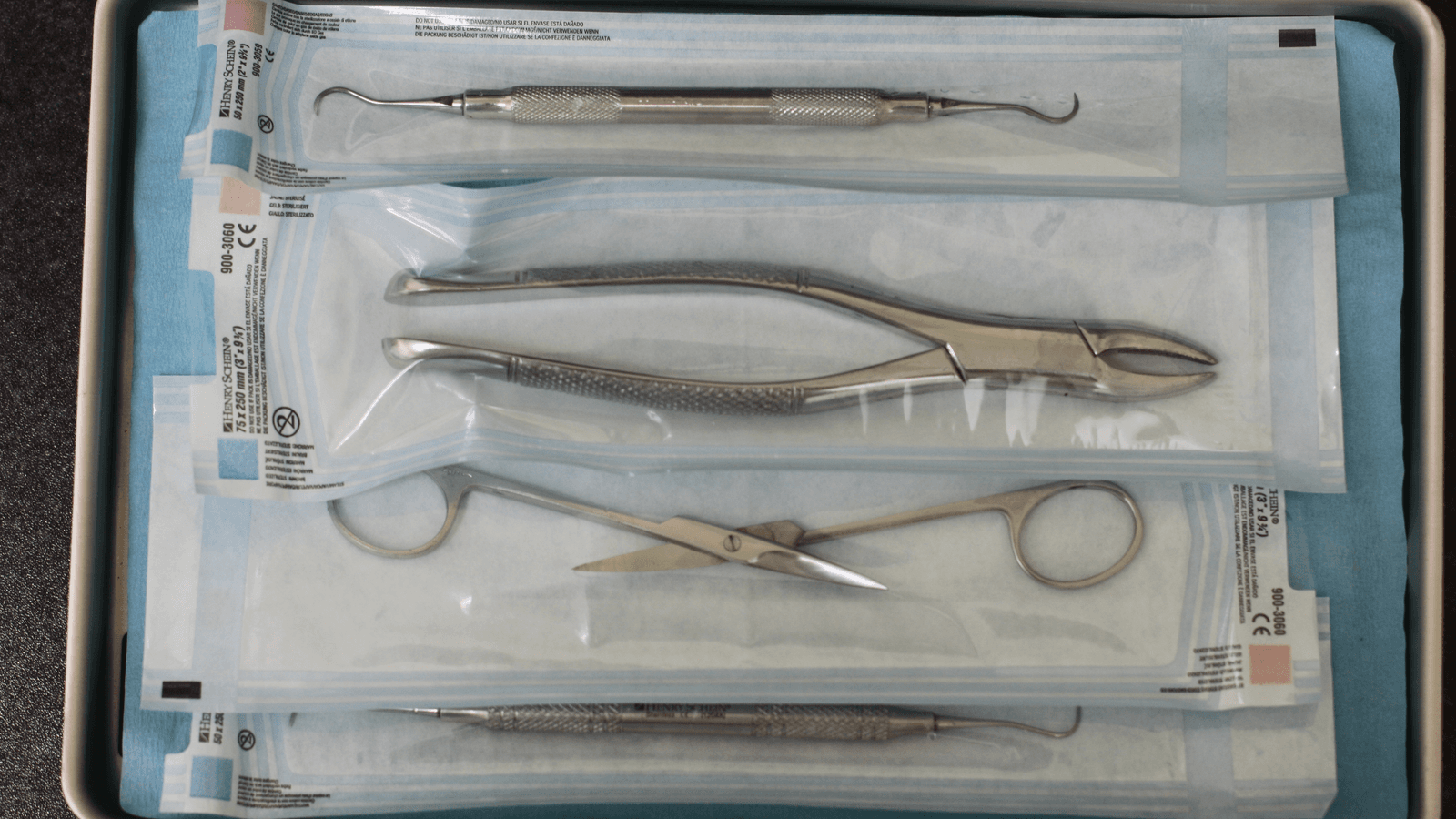
Hard, non-porous implements made of medical-grade stainless steel or ceramic can be completely cleaned, disinfected, and sterilized between appointments. These include cuticle pushers, cuticle nippers, nail clippers, scissors, and rotary e-file bits (carbide and diamond).
Proper decontamination requires a strict two- or three-step procedure: First, the tools must be physically scrubbed with detergent and water or run through an ultrasonic bath to remove organic debris. Second, they must be fully submerged in an EPA-registered hospital-grade disinfectant (like Barbicide or Opti-Cide) for the full contact time (usually 10 minutes), or processed in a high-temperature autoclave sealed in sterilization pouches with chemical color-change indicators.
The 5-minute setup audit: what a sterile mobile station looks like
When your technician unpacks their kit, observe their initial routine during the first five minutes. A top-tier professional will consistently execute the following steps:
- Personal hand hygiene: The technician should thoroughly wash their hands with warm water and soap or apply a generous amount of hospital-grade hand sanitizer before touching your hands.
- Surface barrier protection: They will lay down a clean, impermeable barrier sheet or disposable dental bib over your table to ensure no chemical spills or nail dust contact your furniture.
- Clean zone vs. dirty zone separation: The technician will keep unopened, sanitized supplies strictly separated from used tools and debris throughout the service.
- Unsealing sterile pouches: Metal tools should be retrieved either from a sealed, dated sterilization pouch that is cut open in your presence, or from an enclosed disinfectant transfer container.
- Dust collection: A professional mobile tech will position a portable, filtered dust collector or use an e-file equipped with vacuum suction to capture airborne dust particles at the source.
- Sanitized wrist rest: The client arm cushion should be wiped down with hospital-grade disinfectant wipes immediately upon setup.
Chemical safety, low-HEMA formulas, and UV curing risks
Beyond tool cleanliness, chemical hygiene is a major safety consideration. The nail industry is currently grappling with a steep rise in acrylate contact allergies caused by poorly formulated gel products and improper lamp curing.
Acrylate allergies are permanent and lifelong. Once sensitized to acrylates, a person can develop severe allergic reactions not only to nail enhancements, but also to dental fillings, joint replacements, and medical adhesives that use similar methacrylate compounds.
Protect yourself by verifying that your technician uses branded, professional-grade gel systems rather than unbranded, cheap bottles purchased from unregulated online marketplaces. Ensure the technician never allows wet gel, primer, or uncured builder gel to touch your surrounding skin or cuticles.
Furthermore, the curing lamp must match the chemical photo-initiators in the gel system. If a technician uses an underpowered, cheap mini-lamp, the top layer of gel may look shiny and hard while the deeper layers remain semi-liquid, leaching allergenic monomers directly into your nail bed.
Recognizing contraindications: when service must be paused
A licensed, ethical nail technician is not just an artist; they are trained in nail anatomy and skin pathology. There are specific medical and biological conditions—known in the industry as contraindications—where a technician is legally and ethically bound to refuse or postpone service.
If your technician refuses to apply product over a specific nail, respect their professional judgment. Technicians are not physicians and cannot legally diagnose diseases, but they must protect you from worsening an active condition:
- Paronychia: Red, swollen, hot, throbbing tissue around the cuticle or sidewall, often accompanied by pus. Applying chemicals over an active bacterial infection can cause tissue necrosis or systemic infection.
- Pseudomonas ('The Greenie'): A distinctive green or blackish-brown stain on the nail plate caused by Pseudomonas aeruginosa bacteria multiplying under a lifted enhancement. The artificial product must be removed, the nail plate cleansed, and no artificial coating applied until the stain grows out.
- Onycholysis: The lifting or separation of the natural nail plate from the underlying pink nail bed. Applying heavy enhancements creates mechanical leverage that can tear the nail off permanently.
- Onychomycosis (Fungal Infection): Thickened, crumbly, yellow-brown nails. Fungal spores thrive in the dark, warm, sealed environment beneath artificial nail enhancements.